Preventing Chimney Fires
In this article, you will find:
How do chimneys work?
Tool Chest
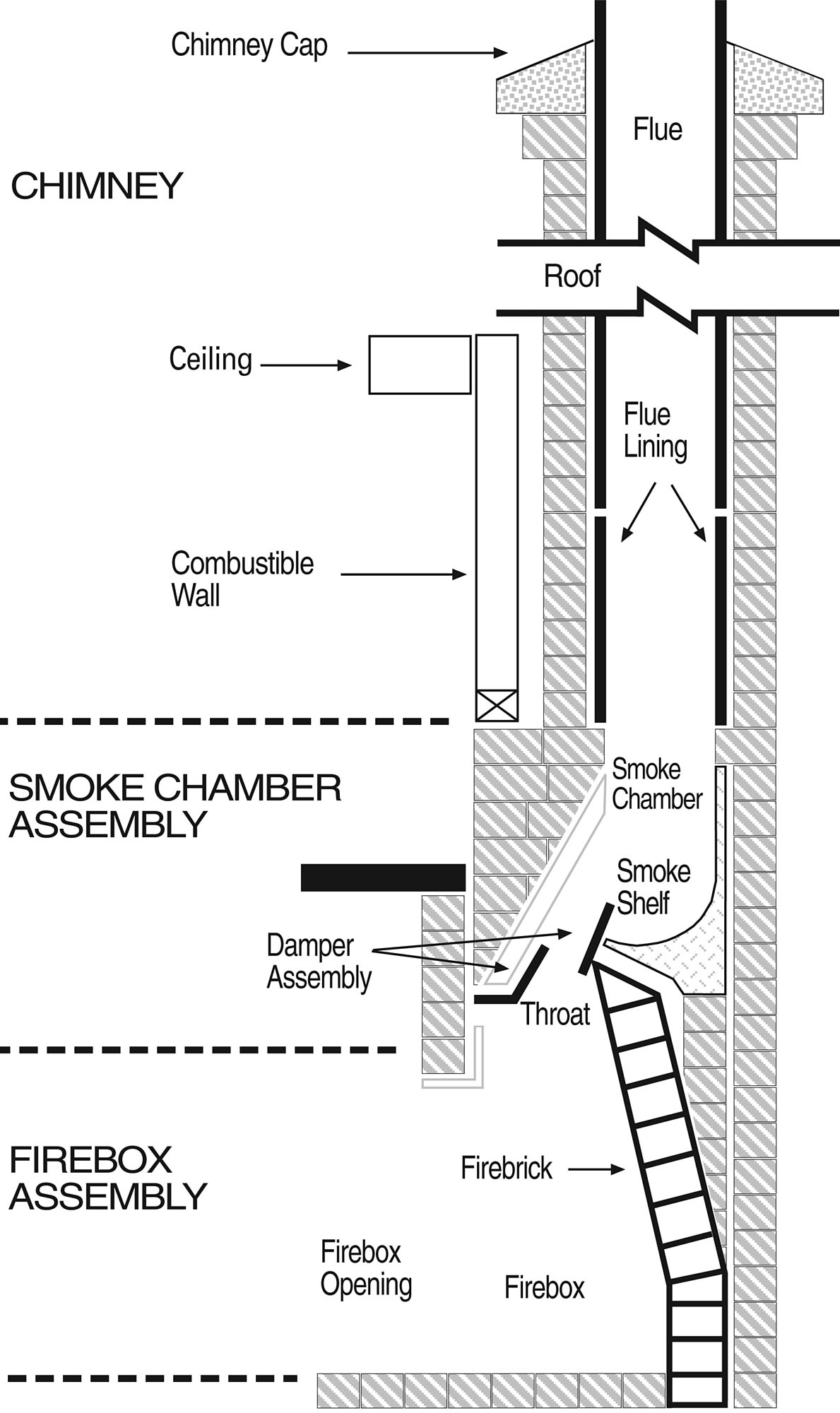
A flue is the void or passageway through which the products of combustion are removed from the fire to the outside. A flue pipe is a pipe used to connect a fire or appliance to a chimney. A flue liner is the material used to form the flue in the chimney. They can be made of fire clay, refractory quality concrete, or metal. Some older chimneys may not have liners.
If you're not that familiar with fireplaces or woodstoves, some of the terminology used to discuss them might be unfamiliar to you. So, let's start with a quick anatomy lesson. While the following terms primarily apply to fireplaces, woodstoves are pretty similar in design. If you have one, you can follow along, too.
Chimneys are the physical structures that allow fire by-products to escape outside. They're usually made of brick or stone. The following is inside a chimney:
Flue. This is the actual tube that smoke travels up through.
Flue liner. This is the material that the flue is made out of. It's usually constructed of fire clay, refractory quality concrete, or metal. Some older chimneys may not have liners. Older unlined masonry chimneys may be used for gas appliances, but they should not be used for wood-burning appliances. The flue gases are corrosive to mortar and can weaken the chimney. Unlined chimneys should be relined before using them with woodstoves or fireplaces.
Flue pipe. This is the pipe that connects a fire or appliance to a chimney.
Smoke chamber. The area where the flue starts. It sits right above the damper.
Damper assembly. Located between the smoke chamber and the firebox, these are adjustable louvers that open and shut to control airflow.
Firebox. Where the fire burns. Consists of firebrick, outer hearth, inner hearth, and sometimes an ash dump door.
Woodstoves have stovepipes instead of flue pipes. They also have more vents for controlling airflow and temperature.
Now that you know how a chimney is put together, let's take a closer look at how they work, and why they sometimes don't work as well as they should.